Carpenter ants are a common problem for Long Island residents. These pests typically live outdoors in moist or decaying wood – like trees, stumps, logs, and lumber piles.
Unlike termites, they don’t eat wood. Instead, they burrow into it to build their nests and create long trails between the surface and their colony. Occasionally, they find their way into wood structures like barns, sheds, and even homes where they cause extensive damage.
Carpenter ants live in colonies that may contain up to 50,000 workers. After several years of growth, each colony spawns reproductive “swarmers” that form a new colony with its own queen. You may not see carpenter ants until they have already damaged your home or weakened your trees. Knowing the signs of a carpenter ant infestation can help you recognize when to call an experienced carpenter ant exterminator to stop them before they reproduce and cause further damage.
Identifying Carpenter Ants on Long Island
Carpenter ants are often mistaken for their less destructive common ant cousins, but there are some distinguishing differences. Compared to common ants, Carpenter ants are much larger and have a heart-shaped head (as opposed to the common ant’s rounded head). Upon close examination, carpenter ants have a rounded thorax with a single node beneath it. Common ants have an angular thorax with two nodes.

Because carpenter ants spend much of their life burrowed inside wood, you may not notice them going about their daily business. You’re most likely to see these pests during their late spring “nuptial flight” when carpenter ants with wings will swarm and mate. The males die off, while the females shed their wings and head off to form new colonies in nearby trees and wood structures.
If you see swarms on or near your property, it’s highly likely that one or more colonies are nearby and may be tunneling into your trees or perhaps even your home.
Types of Carpenter Ants
- Minor & intermediate workers: Minor and intermediate worker carpenter ants are charged with building the colony and foraging for food. They are the smallest members of a carpenter ant colony.
- Major worker: Major worker carpenter ants are larger than minor and intermediate workers. They defend the colony against predators.
- Queen: Carpenter ant queens are the largest members of the colony – often growing up to an inch long. Some colonies may have more than one queen. A queen’s main role is to produce eggs.
Signs You May Have Carpenter Ants
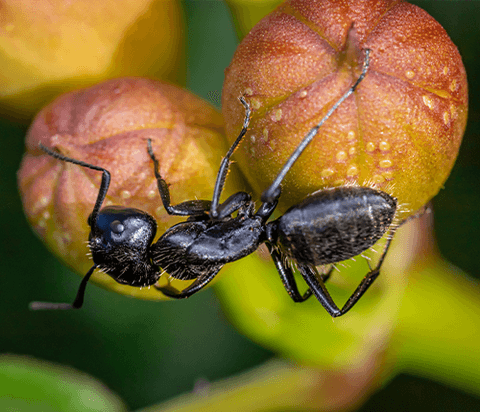
• Big ants: Carpenter ants are significantly larger than common ants and can grow up to ⅝” long. If you see large ants (particularly if they have wings), it’s likely you have a carpenter ant infestation nearby.
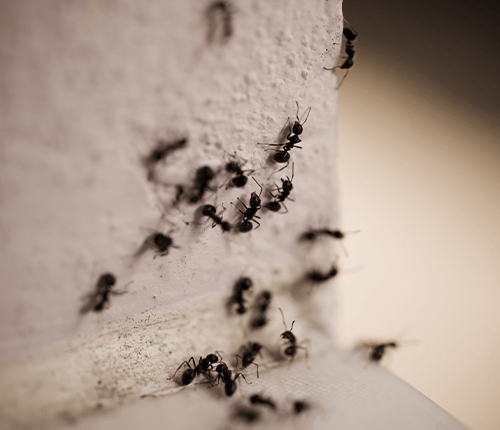
• Swarmers: Carpenter ant alates swarm in late spring or early summer. If you see swarms of flying ants at that time of the year, they’re almost certainly carpenter ants.
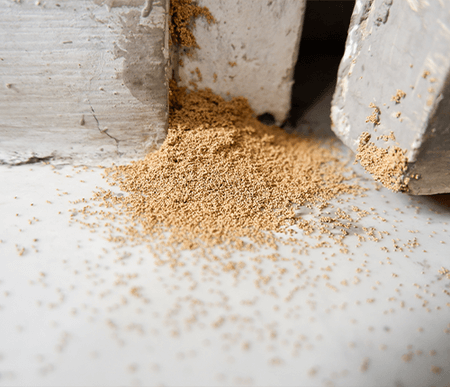
• Frass: Sawdust-like wood shavings are left behind when carpenter ants build their tunnels. Frass can be found near wooden elements of your home like baseboards, windowsills, and door jambs. These leavings contain feces, small pieces of soft & fibrous wood, and even parts of deceased ants.
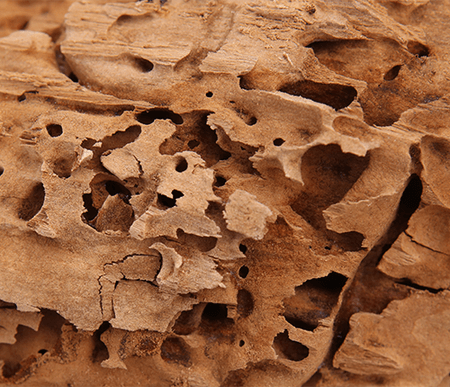
• Trails: As carpenter ants chew through wood, they create long smooth trails inside.

• Rustling: A soft rustling or crinkling sound in your walls (or inside hollow wood) is often an indicator that you have carpenter ants. These noises are particularly noticeable at night.
Integrated Pest Management with Skyway Pest
Skyway Pest Management uses the principles of integrated pest management for carpenter ant control. We focus on the full ecosystem of your home or business while using the best and safest combination of methods to target carpenter ants… and to prevent their return. We view our clients as partners in carpenter ant treatment, and our pest control methods are as environmentally friendly as possible to minimize risks to humans and domestic animals.
Contact Us Today
Call Skyway Pest Management today and let us be your carpenter ant exterminator. Our comprehensive One-Year Residential Contract includes carpenter ant services, and we also offer home or business inspections and HUD/FHA certificates. We stand behind our home inspections 100 percent.